
SGLT2 Inhibitors and Feline Diabetes
SGLT2 inhibitors are changing feline diabetes care.
Blood-ketone spot checks are how you keep patients safe.
Bexacat® and Senvelgo® gave clinics a once-daily oral alternative to insulin, along with a boxed warning for ketoacidosis. Here's why a point-of-care blood glucose and ketone meter belongs beside them.
How to get your free OnTarget meter →Why so many diabetic cats are now on an SGLT2 inhibitor
For the right newly diagnosed cat, an oral SGLT2 inhibitor can replace twice-daily insulin injections with a once-daily oral medication. That's a meaningful change for owner compliance and quality of life, and it's why uptake has been rapid since the two products reached the market.
Bexacat® (bexagliflozin) was the first oral diabetes drug, and the first SGLT2 inhibitor, approved in any animal species. Senvelgo® (velagliflozin) followed as an oral solution. Both work by lowering blood glucose through the urine rather than with injected insulin.
The upside is real. So is the reason the labels are written the way they are.
The catch: euglycemic DKA hides from a glucometer
Both drugs carry the same FDA boxed warning for ketoacidosis, including euglycemic DKA (eDKA), which the FDA's Dear Veterinarian letters specifically warn can be missed because blood glucose is not high. In a cat that still needs insulin, the liver keeps producing ketones even while glucose looks controlled.
That's why the labels call for ruling out ketones before the first dose and monitoring closely through the early weeks, when the risk is highest. And it's why, in the first days on therapy, ketones, not glucose, are the safety metric.
A urine ketone strip can't see the ketone that matters most in DKA. Dipstick reagents detect acetoacetate and acetone, but not beta-hydroxybutyrate (BHB), the ketone that predominates in ketoacidosis. Because urine also lags the blood, a strip can under-read a cat that is deteriorating, and can keep reading positive while a cat is actually resolving. OnTarget measures blood BHB directly.
Ref: Stojanovic & Ihle, Can Vet J 2011;52(4):426-430.
What it tells you
Blood BHB (OnTarget)
Urine ketone strip
Measures BHB, the ketone that predominates in DKA
✓ Yes
✗ No
Reflects the current blood picture
✓ Yes
Lags
Reliable as the cat resolves
✓ Yes
✗ Can read falsely positive
Why glucose alone can miss it
In euglycemic DKA, blood glucose can sit in range while ketones climb. Watching the two together is the point.
What the FDA adverse-event reports show
A June 2026 VetMedGuide analysis tabulated every report in the FDA Center for Veterinary Medicine adverse-event database naming either drug: 7,609 reports in total (4,088 Senvelgo, 3,521 Bexacat), overwhelmingly in cats.
~1 in 3
reports for each drug mention ketosis, the single most-reported reaction (2,792 reports)
412
reports name diabetic ketoacidosis directly (156 Senvelgo, 256 Bexacat)
86%
of ketosis/DKA episodes in the velagliflozin field trial occurred in the first two weeks
Reports flagged serious (death, life-threatening, or requiring intervention) ran higher for Bexacat (22.1%) than Senvelgo (15.8%) in this dataset. The two products also record fatal outcomes, as you would expect in a diabetic-cat population where DKA and concurrent disease are common causes of death regardless of therapy.
Read this the right way. The FDA cautions that spontaneous reports do not establish causation or true event rates. A report "involving" a drug means the drug was being given when an event was recognized, not that it caused it. Every cat in the dataset is already diabetic and at baseline DKA risk. The value here is the pattern of what gets flagged, and that pattern points squarely at ketones.
Source: VetMedGuide analysis of the FDA CVM adverse-event database, June 2026.
OnTarget: the point-of-care sidekick for your SGLT2 patients
The PetTest OnTarget™ Blood Ketone & Glucose Meter gives you both numbers chairside, so a quick spot check tells you whether a cat is trending toward trouble, without sending blood to the bench and waiting.
7 sec
blood ketone (BHB) result
<5 sec
blood glucose result
~72¢
per ketone test
Ketone results on just 0.5 µL of blood, so you skip long benchtop wait times. Results download automatically to the free PetTest Digital Companion App for easy tracking across rechecks.

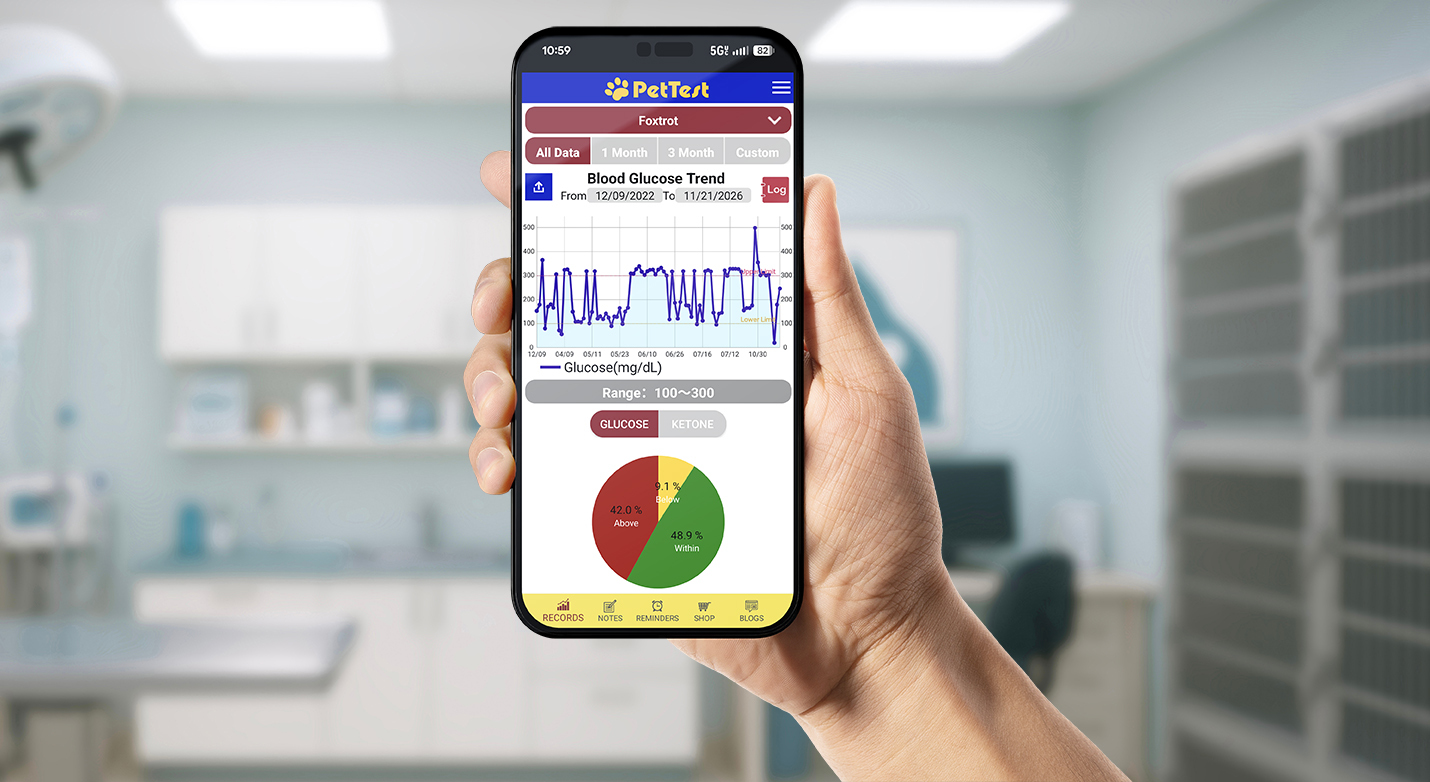
Refills cost less direct from PetTestVet than on VetCove: 25 blood ketone strips are $17.95 (VetCove $21.95), and 50 blood glucose strips are $28.95 (VetCove $33.50).
Prescribing Bexacat or Senvelgo?
Your free OnTarget meter kit is on us.
Tell us where to ship and a PetTest rep will confirm your details, then send a free OnTarget Blood Ketone & Glucose Meter to your clinic.
Claim your free meter →Offer for veterinary professionals in the United States; one kit per clinic, while supplies last.
This page is educational and is not a substitute for the products' FDA prescribing information, boxed warning, or your clinical judgment. Patient selection, dosing, and monitoring decisions rest with the prescribing veterinarian. Bexacat® is a registered trademark of Elanco or its affiliates; Senvelgo® is a registered trademark of Boehringer Ingelheim or its affiliates. PetTest is not affiliated with, sponsored by, or endorsed by these manufacturers.
Data: VetMedGuide analysis of the FDA Center for Veterinary Medicine adverse-event database (public extract, June 2026); FDA Dear Veterinarian letters and prescribing information for Senvelgo and Bexacat; velagliflozin FOI Summary (NADA 141-568). Ketone testing: Stojanovic & Ihle, Can Vet J 2011;52(4):426-430; Zeugswetter & Pagitz, J Small Anim Pract 2012; Weingart, Lotz & Kohn, J Vet Diagn Invest 2012. Full citations available on request.